
Introduction
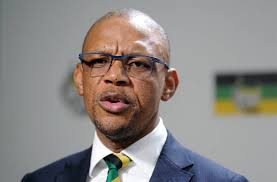
In a significant development in South Africa’s ongoing battle against corruption, Pule Mabe, the former CEO of the National Energy Corporation (NEC), returned to court last week to face a series of corruption charges. This trial marks the latest chapter in a saga that has been under investigation for several years, revolving around large-scale corruption involving state contracts.
For more: /
Who is Pule Mabe?
Pule Mabe’s rise to prominence in South African politics and public service was initially marked by his tenure as CEO of the National Energy Corporation (NEC), a critical state-owned enterprise. He gained recognition for his managerial skills, which helped the corporation navigate through financial and operational challenges. However, his name would eventually become synonymous with corruption and mismanagement as several of his decisions were later scrutinized.
During his time as CEO, Mabe was instrumental in securing several high-value energy contracts. However, the aftermath of those deals raised questions about their legitimacy, as many of them seemed to involve inflated prices and favoritism towards certain private companies. In the wake of these controversial contracts, investigations were launched to determine whether Mabe had benefited personally or allowed others to profit unlawfully.
Despite initially denying any wrongdoing, the charges against Mabe continued to grow in severity, culminating in his reappearance in court to face these accusations head-on. His case is emblematic of the broader concerns over corruption within South Africa’s state-owned enterprises, which have been plagued by scandals in recent years.
The Corruption Charges Against Pule Mabe
The charges Mabe faces are serious and involve multiple facets of corruption. Central to the case is his alleged role in awarding inflated contracts to foreign companies for the purchase of energy equipment. Critics argue that these contracts were overpriced and were part of a larger scheme to embezzle public funds.
One of the key allegations is that Mabe used his position to direct contracts to businesses with which he had personal connections, thereby ensuring financial benefits flowed to him and his associates. The charges also include accusations of financial mismanagement, fraud, and even money laundering, with claims that funds meant for public energy projects were funneled into private accounts.
Furthermore, reports have suggested that Mabe attempted to cover up his actions through complex financial maneuvers that made it difficult to track the movement of funds. These moves have raised alarms over the effectiveness of internal auditing systems within state-owned corporations.
For further details on corruption investigations in South Africa, check out The South African News and Corruption Watch.
The Political and Social Reactions
The charges against Mabe have ignited a firestorm of debate across South Africa, particularly within political circles. The ruling party, the African National Congress (ANC), has faced internal pressure to take a stronger stance against corruption. Some party members have supported the ongoing investigation, recognizing the importance of holding public officials accountable, regardless of their political affiliations.
However, there are others within the ANC who view the trial as part of a broader political agenda. Some analysts suggest that Mabe’s prosecution is not purely about corruption but is instead tied to internal power struggles within the ANC. The case has thus taken on a political dimension, with various factions using it to push their agendas.
Public opinion on Mabe’s trial is divided. While many citizens are calling for a harsh sentence to serve as a deterrent against future corruption, others are more skeptical. Some believe that Mabe is being used as a scapegoat for larger systemic issues, and that focusing on one individual will not address the root causes of corruption in South Africa’s public institutions.
The Economic and Social Impact of Corruption in South Africa
Corruption in South Africa’s state-owned enterprises (SOEs) has had a detrimental impact on the country’s economy. These enterprises, which include organizations like Eskom (the national electricity supplier) and the South African Airways (SAA), are vital for the country’s infrastructure and public services. The mismanagement of these organizations has led to inefficiency, financial instability, and a lack of trust among both domestic and international investors.
In the case of the National Energy Corporation, the effects of the alleged corruption have been particularly damaging. South Africa has been facing energy shortages and frequent power outages in recent years, which are partly attributed to the misallocation of funds meant to improve the country’s energy infrastructure.
Moreover, the economic fallout from corruption in SOEs has contributed to a general decline in public confidence in the government. As corruption becomes more pervasive, citizens increasingly feel disconnected from their leaders, and the trust in state institutions continues to erode.
For a deeper understanding of the economic consequences of corruption in South Africa, see the article on Business Day.
The Future of the Case and Its Broader Implications
As Pule Mabe’s trial continues, many are watching closely to see whether justice will be served. A conviction could send a strong message that corruption in South Africa’s public sector will not be tolerated, while an acquittal could raise questions about the country’s ability to hold powerful individuals accountable.
The outcome of Mabe’s case could have lasting implications for the future of South African politics and governance. If found guilty, Mabe could face severe penalties, including imprisonment and financial restitution, and his case could serve as a benchmark for future investigations into corruption within the country’s state-owned enterprises.
Ultimately, the trial represents more than just a legal battle for one individual—it symbolizes the broader struggle of South Africa to reform its political institutions and restore trust in public leadership. Whether or not Mabe is convicted, the case underscores the need for systemic changes to prevent future instances of corruption and to ensure that the country’s resources are used for the benefit of all its citizens.
Conclusion
Pule Mabe’s return to court is not just about his personal fate—it is a pivotal moment in South Africa’s ongoing battle against corruption. The case has already sparked political debates and raised important questions about the integrity of state-owned enterprises. The broader implications for the country’s economic and social fabric remain to be seen, but the trial highlights the urgent need for transparent and accountable leadership.
As the case unfolds, many South Africans hope it will lead to a more just and transparent system, where individuals in positions of power are held accountable for their actions, and public resources are used responsibly. The outcome of Mabe’s trial could set the tone for future corruption cases and could potentially shape the trajectory of South Africa’s fight against corruption for years to come.
For regular updates on the trial, visit News24 and Daily Maverick.
Table of Contents
The post by: https://briefly.co.za