Introduction
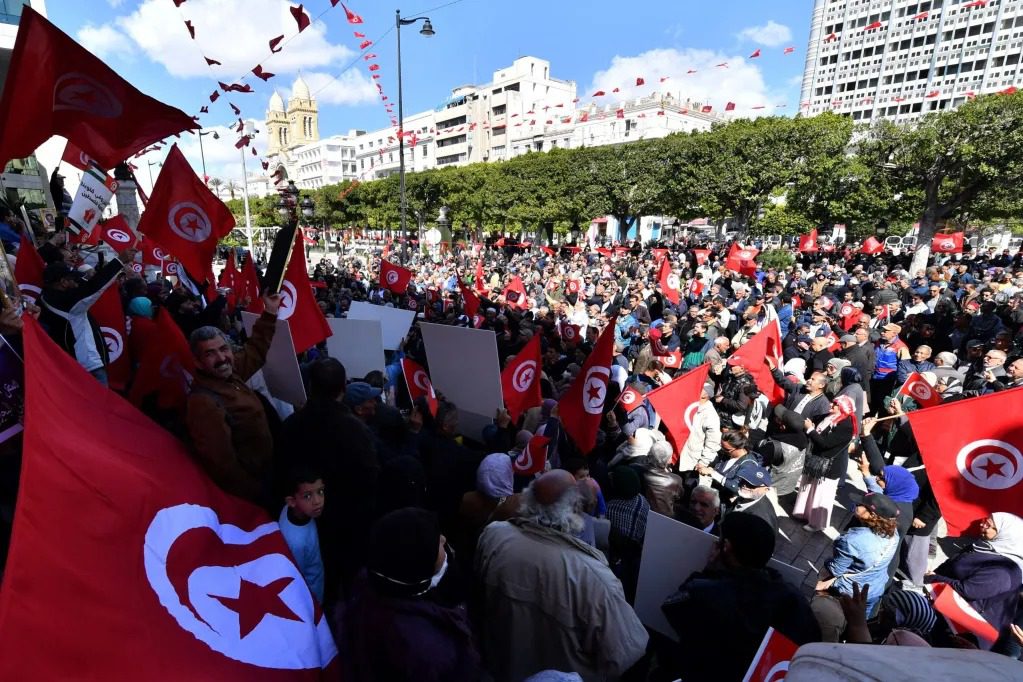
Tensions in Tunisia have been rising as thousands of citizens take to the streets in protest against President Kais Saied’s rule. What started as a response to economic hardship and unemployment has quickly evolved into a broader movement demanding democratic reforms. As Saied’s government tightens its grip on power, the protests have become a flashpoint in the nation’s political future. In this article, we explore the critical factors that have driven the Tunisian protests and the potential consequences for the country.
The Economic Crisis: A Catalyst for the Tunisian Protests
At the heart of the Tunisian protests is the severe economic crisis that has left many citizens struggling. Tunisia, once seen as a model of democracy in the Arab world after the 2011 revolution, is now facing a series of economic challenges that have only worsened in recent years. Inflation has skyrocketed, basic goods are in short supply, and unemployment is high—particularly among young people. With many Tunisians feeling the effects of a faltering economy, these protests are not just about political reforms but also about securing better economic opportunities and financial stability.
The Authoritarian Turn: Why Saied’s Power Grab Sparked Protests
President Kais Saied’s increasingly authoritarian actions have been a significant trigger for the current unrest. In 2021, Saied dissolved the parliament and suspended the constitution, citing the need to restore order. However, these measures have been widely criticized as a power grab. Many Tunisians believe that Saied’s actions are a direct attack on the democratic gains made after the 2011 revolution. This shift toward authoritarian rule has provoked outrage, with protesters calling for a return to the democratic principles enshrined in the constitution.
The Role of Youth in the Tunisian Protests
Young people in Tunisia have been at the forefront of the protests. This generation, who grew up in the shadow of the 2011 revolution, has watched the promises of democracy and economic prosperity slowly fade. High unemployment rates among the youth, combined with the lack of political representation, have created a sense of frustration and disillusionment. As a result, young Tunisians are demanding change—not only in the political system but also in the economic opportunities available to them.
Security Forces and the Growing Tensions
As the protests intensify, the Tunisian government has responded with increasing force. Security forces have used tear gas and rubber bullets to disperse crowds, raising concerns about the potential for violent confrontations. The government’s reliance on heavy-handed tactics has only fueled further anger and resentment among protesters. Many fear that the situation could spiral into a full-scale confrontation between the people and the state, leading to a period of instability for Tunisia.
International Reactions and Tunisia’s Global Standing
The international community has been watching the Tunisian protests with growing concern. Countries like the United States and the European Union, which have long supported Tunisia’s democratic transition, have expressed concern over the erosion of democratic norms. There have been calls for President Saied to restore the constitution and engage in dialogue with opposition groups. Tunisia’s relationships with global powers are at stake, and how the government responds to the protests will have far-reaching consequences for the country’s international standing and future support.
What Lies Ahead for Tunisia?
The future of Tunisia remains uncertain as the protests show no signs of subsiding. The key questions now are whether President Saied will make concessions or whether the protests will continue to grow in size and intensity. If Saied does not address the underlying issues—such as economic instability, political repression, and public discontent—Tunisia could face prolonged unrest. Alternatively, the protests could lead to a broader political change, potentially restoring democratic governance and paving the way for much-needed reforms.
FAQs About the Tunisian Protests
1. What are the main causes of the Tunisian protests?
The protests in Tunisia are mainly driven by economic hardship, high unemployment, inflation, and the shift toward authoritarian rule under President Saied.
2. How have the security forces responded to the protests?
Security forces have used tear gas and other crowd control measures to disperse protesters, leading to rising tensions between the government and the demonstrators.
3. What role does youth activism play in the protests?
Young people, particularly those affected by high unemployment, are playing a significant role in the protests, demanding both political and economic reforms.
Conclusion
The Tunisian protests are a reflection of the broader discontent that many citizens feel about the current state of their country. With a combination of economic struggles, political repression, and youth dissatisfaction, these protests have become a powerful force for change. The outcome remains uncertain, but it is clear that Tunisia’s political future is at a crossroads. Whether the protests lead to democratic reforms or further unrest will depend on the willingness of the government to listen to the demands of its people and act accordingly.