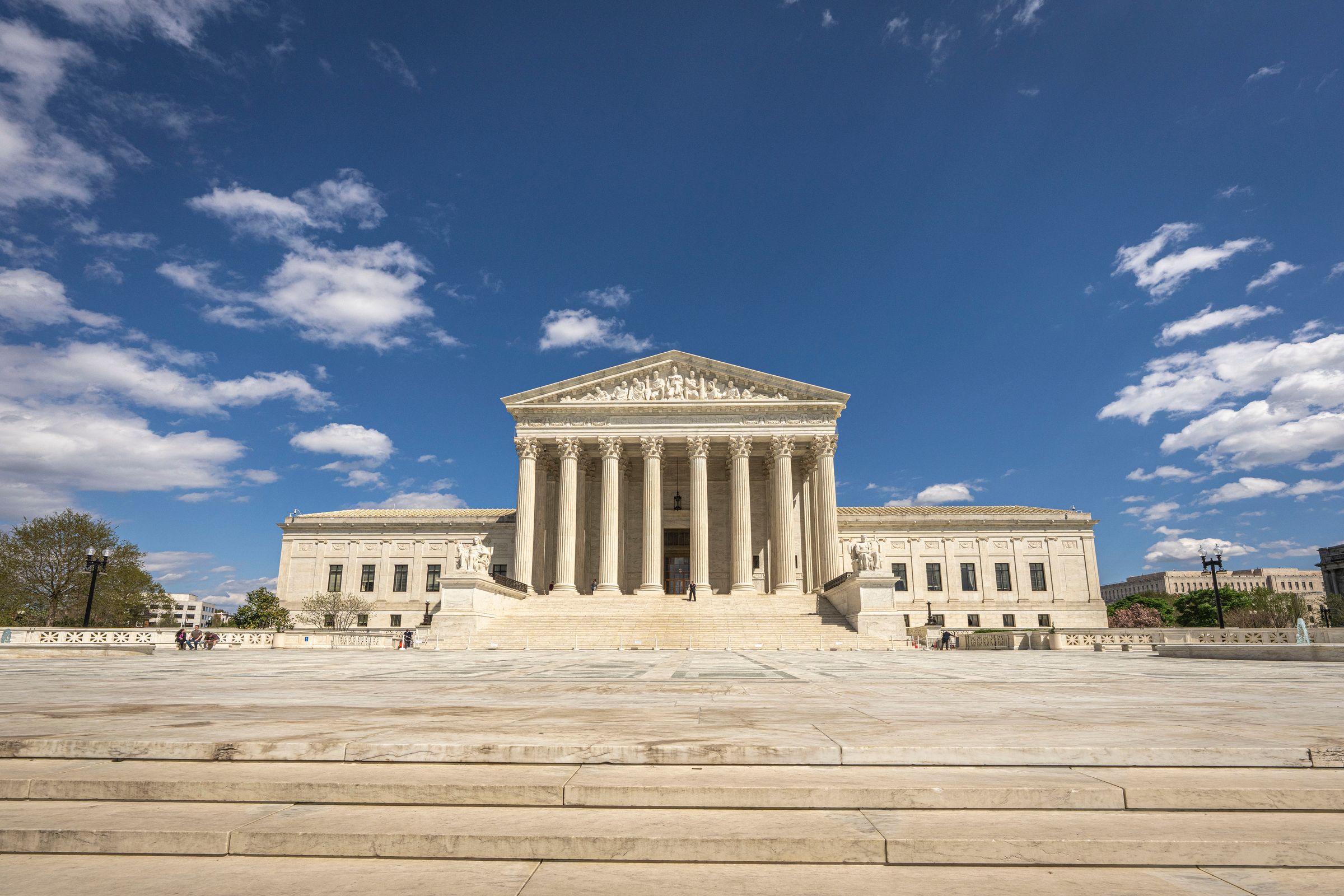
South Africa’s legal machinery for combating hate speech received a significant operational upgrade on 7 October 2026, when the Supreme Court of Appeal handed down a judgment clarifying how the Promotion of Equality and Prevention of Unfair Discrimination Act 4 of 2000 functions in practice, even in circumstances far removed from public broadcasts or street demonstrations.
The case arose from three racial statements made by Mr Ackerman, a white business associate, to Mr Wellman, another business associate. The statements, delivered on different occasions, each involved Mr Ackerman using the k-word and referring to black people in a derogatory manner. Mr Wellman subsequently shared the statements with his black business partner, Mr Amaning.
From the outset, the Supreme Court of Appeal accepted that the statements were made and constituted hate speech under the Act. The harder question, and the one that tested the working of the legal framework, was whether statements exchanged privately between one white person and another could still fall within the Act’s reach. Answering that required the Court to engage with two earlier judgments: the Constitutional Court’s decision in Qwelane v South African Human Rights Commission, [2021] ZACC 22, and the Supreme Court of Appeal’s ruling in Afriforum NPC v Nelson Mandela Foundation Trust and others, [2023] ZASCA 58.
The Court confirmed the operational test for hate speech: whether a communication is based on a prohibited ground, such as race, and whether there was an intention to incite harm or propagate hatred on that ground. The fact that the communication was directed at another white person does not change the outcome. The Court went further, holding that the communication also constituted harassment of Mr Wellman, because it was directed at him on the basis of his race, under the assumption that his race meant he would be familiar with racism against black South Africans.
Mr Ackerman had sought to rely on Qwelane, in which the Constitutional Court held that hate speech prohibitions should not extend to private communications, since private conversations are unlikely to perpetuate stereotyping and unfair discrimination. He argued that his exchanges with Mr Wellman were private and therefore fell outside the Act. The Supreme Court of Appeal rejected that reading. It asserted that the Constitutional Court in Qwelane had accepted that the communication requirement for hate speech includes private communications, and that any exclusion is limited to what is necessary to protect the inner sanctum of a person. WhatsApp communications between business associates do not qualify for that protection. The Court added that privacy cannot be abused to shield actions unrelated to protecting the rights to privacy and dignity.
A comparable argument featured in Afriforum, which concerned private displays of the old flag, a case in which the firm acting on behalf of the Nelson Mandela Foundation prevailed. In the present matter, the Supreme Court of Appeal did not rule directly on that issue, but observed that it would be difficult to find that the private display of the old flag within one’s home, where family members and children may be indoctrinated in racism and white supremacy, would not violate the Act.
Meanwhile, the Court also addressed the mechanics of republication. The repetition rule, under which a re-publisher of a defamatory statement is treated as the original author, was held not to apply to the repetition of hate speech in this matter. The Act, the Court found, already provides a complete legal framework for dealing with hate speech, making the repetition rule unnecessary. Mr Wellman had no defamatory intention when passing the statements to Mr Amaning, and the republication did not attract liability.
The judgment delivers much needed clarity on how the rights to equality, dignity, freedom of expression, and privacy operate alongside one another, a relationship that has remained contested since Qwelane and Afriforum. For those charged with applying the Act on the ground, the boundaries of what counts as hate speech, and where privacy protections end, are now considerably easier to administer. Whether future cases will test those boundaries further remains an open question.