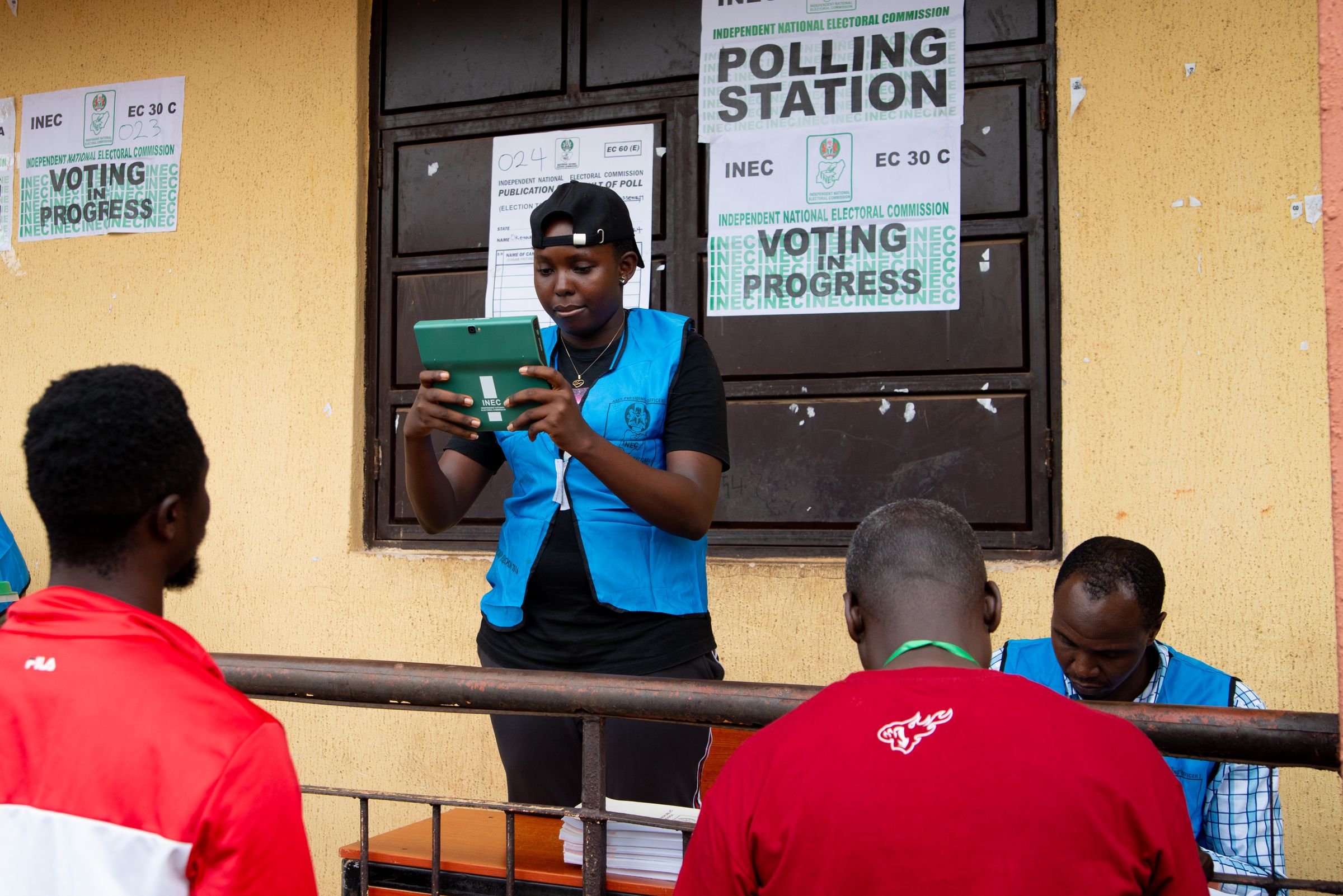
The Constitutional Court’s judgment of 15 October restored the candidacies of 181 African National Congress (ANC) candidates for South Africa’s local authority elections on 4 November, overturning an Electoral Court ruling of 16 September that had barred them from standing in six municipalities. The case turned on a single operational failure. The party had captured its candidates’ names on the Independent Electoral Commission (IEC) portal but never pressed the final submit button before the deadline of 28 August.
The dispute began with the ANC’s failure to submit details of candidates contesting proportional representation and ward seats in six municipalities across the Eastern Cape, Free State and KwaZulu-Natal. That administrative slip placed the electoral machinery itself under scrutiny. The IEC, as the body responsible for managing the registration process, had to decide whether a technical omission could disqualify candidates from the ballot.
The commission chose to enforce the deadline. It argued that the ANC had failed to press the final submit button and had therefore missed the cut-off, a position that cost it the case but demonstrated the independence an electoral management body requires in assuring free and fair elections. The IEC was in a difficult position. Had it ignored the technicality and allowed the ANC to proceed with registration, it would have faced accusations of bending the rules in favour of the ruling party. Its stance, even though the ruling went against it, matters because it shows that the ANC does not stand above legal reproach.
Meanwhile, the ANC’s decision to challenge the IEC’s decision in court, rather than accept exclusion, is itself presented as evidence that South Africa operates as a rule-based democratic dispensation. The case then moved through the court structure as designed. The Electoral Court, composed of five members appointed by the president on the advice of the Judicial Service Commission, reviews any decision made by the IEC regarding an electoral matter and may alter, reverse or uphold it. The Constitutional Court, the apex court in the country, guards constitutional supremacy, ensuring that all laws and their interpretation comply with the constitution. It is composed of 11 judges appointed by the president on the recommendation of the Judicial Service Commission.
The constitutional anchor for the ruling is Section 19(2) of the Bill of Rights, in chapter 2 of the constitution, which guarantees every citizen the right to “free, fair and regular elections”. The reasoning runs through the principle of popular sovereignty. In a liberal democracy, citizens are sovereign, meaning no one stands above the people as a collective, and elected leaders rule on the basis of a ‘borrowed’ mandate from the citizens. A ruling that had gone against the ANC’s ‘prayers’ would have disenfranchised those sovereigns of their right to vote for a party of their choice.
After the court ruling, the IEC extended the same relief to 32 other political parties that were also affected, an operational follow-through that widened the judgment’s practical effect beyond the ANC alone.
The broader context is the structure of South Africa’s liberal constitutional democracy, which is underpinned by checks and balances and the rule of law. Such a system rests on three key features: democracy, meaning government by the people; constitutionalism, meaning the rule of law and limits on both political and judicial powers; and liberalism, meaning the protection of individual freedoms and rights. Within it, the three organs of state, namely the legislature, the executive and the judiciary, must be independent of each other, hence the notion of checks and balances. The rule of law simply means that no person, group of people or government entity is above the law.
Writing in a personal capacity, Uaripi Tjihenuna, a commissioner of the Electoral Commission of Namibia (ECN), observes that the case played itself out in a typical constitutional democracy playbook fashion, and that the Constitutional Court’s ruling is consistent with the spirit of ‘Batho Pele’, a Sesotho phrase translating as ‘people first’. The mantra, adopted by the South African government in 1997, speaks to the need for all state institutions to account to citizens. The views expressed are entirely his and not those of the ECN.
Whether the IEC’s portal now carries clearer safeguards for final submission, and whether other parties will test the same technical fault lines before 4 November, remains the open question this episode leaves behind.