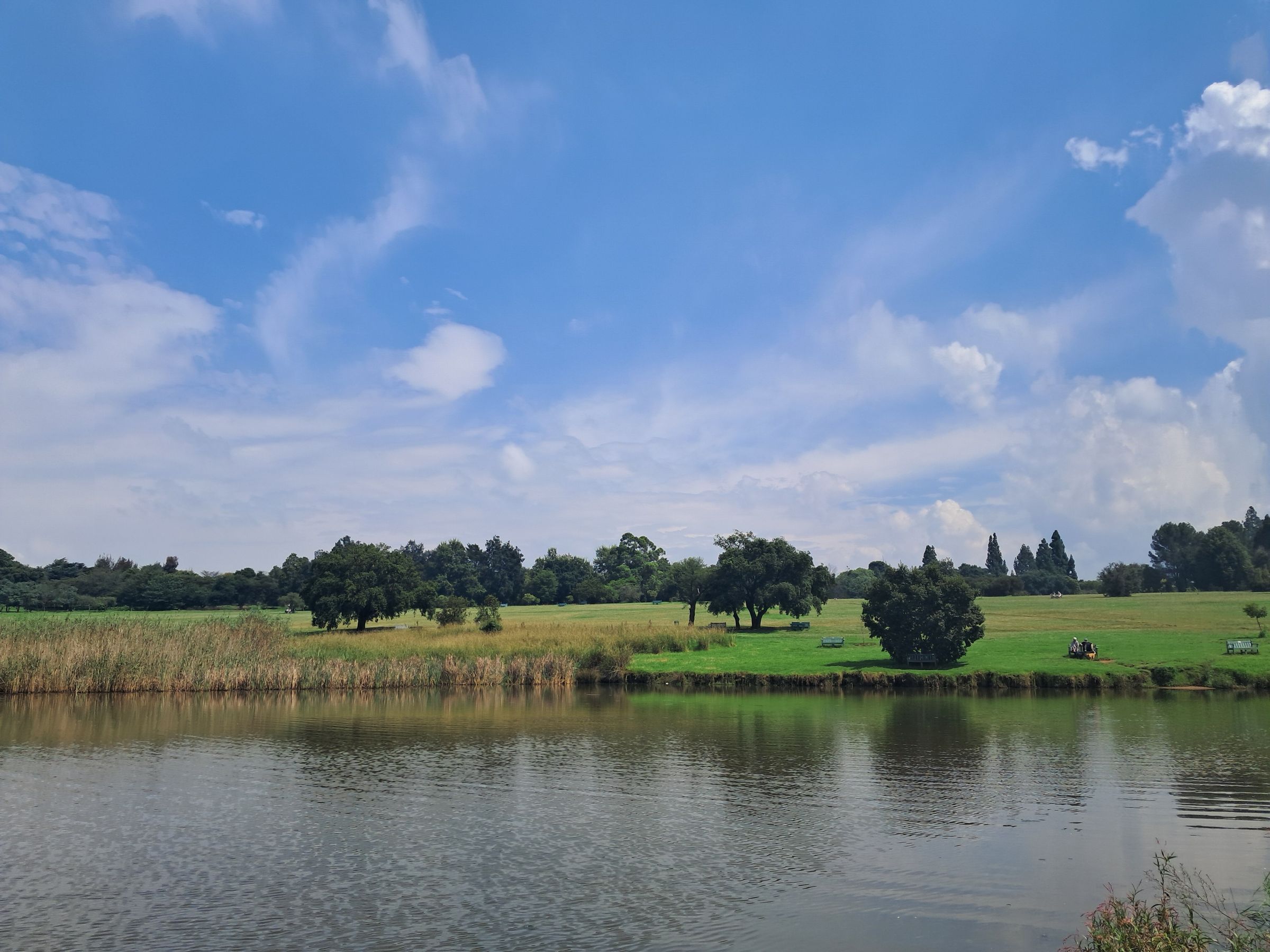
In Melville, a Johannesburg suburb, the taps stayed dry for weeks. For residents there, the water crisis that followed an explosion at a Rand Water plant in late January was not an abstraction about national infrastructure budgets. It meant waiting for tankers, coping with burst pipes and living with daily disruption. Their experience captures, in the most immediate terms, the crossroads at which South Africa’s infrastructure now stands.
The explosion disrupted supply across Gauteng, affecting Johannesburg, Tshwane and Ekurhuleni. The immediate damage was repaired within 72 hours. Water levels across the province took far longer to recover. In Johannesburg, outages persisted for weeks, with suburbs such as Melville left without water for extended periods due to burst pipes, maintenance backlogs and system failures. The episode showed how shocks to already fragile systems can produce prolonged and widespread consequences for households and businesses alike.
The strain is visible across the city, whether in suburbs, townships or informal settlements. In some areas, taps run dry and water tankers line the streets. Elsewhere, small pipe leaks have expanded into dangerous potholes. These disruptions have become part of a broader pattern reshaping daily life and business activity in the country. Infrastructure may be invisible when it works, but when it fails, it directly shapes productivity, investment and the pace of growth.
Gauteng Premier Panyaza Lesufi noted in the State of the Province Address that the issue is not water availability, but interruptions caused by infrastructure failure, leaks and peak demand. The scale of the problem was underlined by a 2025 report to Parliament, which revealed that Johannesburg Water has a non-revenue water rate of about 44.8%, limiting its ability to generate sufficient revenue to fund infrastructure development.
In response, the City of Johannesburg has committed R760 million to infrastructure upgrades, including a new reservoir, tower and emergency pumping capacity in Brixton, alongside a planned 5km pipeline. At a provincial level, expansion linked to the Lesotho Highlands Water Project aims to strengthen long-term supply.
The stakes reach well beyond one city. According to the World Bank, infrastructure connects people to opportunities, supports livelihoods and underpins economic expansion. Budget 2026 data show that public-sector infrastructure spending over the medium-term expenditure framework will reach an estimated R1.07 trillion, directed towards logistics, energy, water and sanitation. State-owned companies remain the largest contributors, with projected capital investment of R445.5 billion over the next three years, highlighting both the scale of commitment and the importance of effective delivery.
The cost of failure is already measurable. The World Bank reports that the deterioration of infrastructure services in 2023 contributed to power outages that reduced GDP growth by an estimated 2% and cost around 500 000 jobs, while inefficiencies in rail and ports lowered exports by about 20%. Yet reform momentum is growing. With support from the World Bank and other partners, the government has begun implementing key structural changes. In energy, the 2022 Energy Action Plan opened the sector to private investment and strengthened regulation, further supported by a USD1 billion Energy Transition Development Policy Loan in 2023. Eskom’s debt relief contributed to an improvement in energy availability, rising from 55% to 63% by late 2024. In transport, the 2023 Freight Reform Roadmap, supported by the World Bank, aims to improve logistics performance, attract private capital and stabilise Transnet’s financial position.
More recent progress is reflected in the Operation Vulindlela Progress Report, a joint initiative of the Presidency and National Treasury that highlights advances in the electricity sector, including steps to enhance competition, expand generation capacity and enable additional renewable energy projects. In freight logistics, reform has gained traction through port concessions in Durban, unlocking new investment and modernisation, alongside efforts to open the freight rail network to greater competition. In the water sector, preparatory work is underway to strengthen infrastructure delivery and regulation, with the aim of improving long-term water security for households and the economy.
Challenges remain, however, including ageing infrastructure and persistent disruptions in parts of the country. Water is emerging as a more immediate pressure point. A combination of systemic constraints, including governance challenges such as corruption, theft and vandalism, alongside shortages of technical skills and institutional capacity, continues to undermine progress. Execution is also a critical bottleneck: government data shows infrastructure underspending between 2022/23 and 2024/25 reached about R23.3 billion, pointing to ongoing delivery challenges across national departments, state-owned entities and public institutions.
The electricity sector offers lessons. Reforms there gained political momentum because loadshedding cost the economy billions and forced some businesses, particularly SMEs, to close. That urgency was reinforced by regulatory changes opening space for private participation and by stronger coordination through mechanisms such as Operation Vulindlela. Water, by contrast, remains constrained by leakages, billing failures, maintenance backlogs and limited institutional capacity, particularly at municipal level. The World Bank notes that South Africa does not lack access to capital but faces challenges in mobilising and allocating long-term finance effectively, compounded by weak delivery systems.
The 2026 Budget Speech reaffirmed infrastructure investment as a foundation for long-term growth, improved service delivery and job creation. In the water sector, this includes bulk augmentation schemes, the refurbishment of ageing assets and the completion of strategic projects supporting economic activity, agriculture and household supply. Reforms aimed at improving efficiency, accelerating delivery and unlocking greater private sector participation are also underway.
For residents of Melville and communities like theirs, the difference between constraint and enabler is felt at the tap. With clearer policy direction, stronger public-private collaboration and more capable institutions, including possible ring-fenced utilities, performance-based governance and stronger national coordination, infrastructure could shift from crisis management to long-term planning. When systems are designed to support development outcomes, businesses and communities are able to thrive.
By Denise Mhlanga