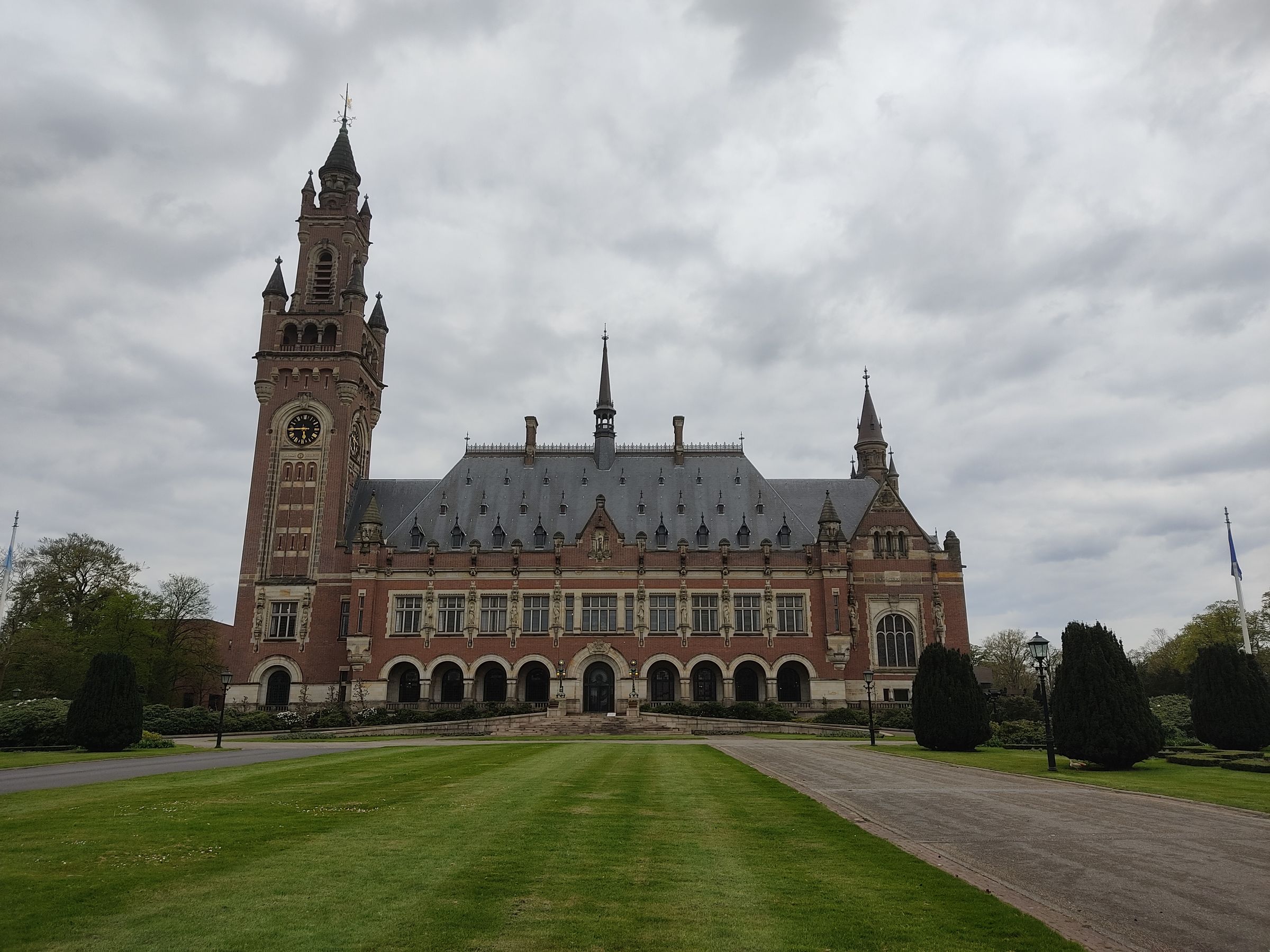
Phoebe Okowa of Kenya claimed the final seat on the International Court of Justice on Tuesday, but only after a deadlock that took several rounds of voting to break. She and four other judges elected at United Nations headquarters will take their seats on February 6, 2027, arriving at a bench already carrying more work than it has ever faced, including a genocide case brought by South Africa against Israel over its war on Gaza.
The five will serve nine-year terms. Alongside Okowa are Dapo Akande of the United Kingdom, Francois Alabrune of France, Mahmoud Daifallah Hmoud of Jordan and Rena Lee of Singapore.
For the people whose disputes land before the World Court, the identity of the bench matters in practical terms. The Hague-based court has 15 judges, each from a different country, who settle disputes between states and issue advisory opinions on questions of international law. One third of the bench stands for election every three years, a staggered arrangement designed to preserve continuity.
The vote itself required patience. Candidates needed an absolute majority in both the General Assembly and the Security Council, with the two bodies voting by secret ballot concurrently but separately. Four seats were settled quickly. The fifth proved stubborn.
The Security Council backed Ecuador’s Marcelo Vazquez-Bermudez. The General Assembly backed Okowa. The deadlock broke only when Vazquez-Bermudez withdrew from the race, after which Okowa won the support of both bodies.
Meanwhile, the new judges step into a docket of unusual scale. ICJ President Yuji Iwasawa told the General Assembly on October 29 that 24 contentious cases are pending, spanning disputes over territory, human rights and the interpretation of international treaties.
Among the most closely watched is South Africa’s case accusing Israel of violating the Genocide Convention in its war on Gaza. The court has previously ordered provisional measures in that case but has not issued a final ruling on whether genocide occurred. In October 2025, it also issued an advisory opinion outlining Israel’s obligations towards the United Nations and humanitarian organisations operating in the occupied Palestinian territory, a question with direct consequences for aid groups and the people they serve.
Further relief may come soon for others with long-running stakes before the court. On Tuesday, the same day as the election, the ICJ announced it would deliver a judgment on November 19 in The Gambia’s case accusing Myanmar of genocide against the Rohingya minority.
The court itself is an institution with long roots. Established in 1945, it is the UN’s principal judicial organ, charged with resolving disputes between states. But for all its institutional weight, its work ultimately reaches people on the ground: communities caught in territorial disputes, minorities whose treatment is the subject of genocide claims, and humanitarian workers navigating obligations set out in advisory opinions.
Tuesday’s election, coming amid a record caseload, will determine who shares in that responsibility for the next nine years. For the five successful candidates, the work begins on February 6, 2027.