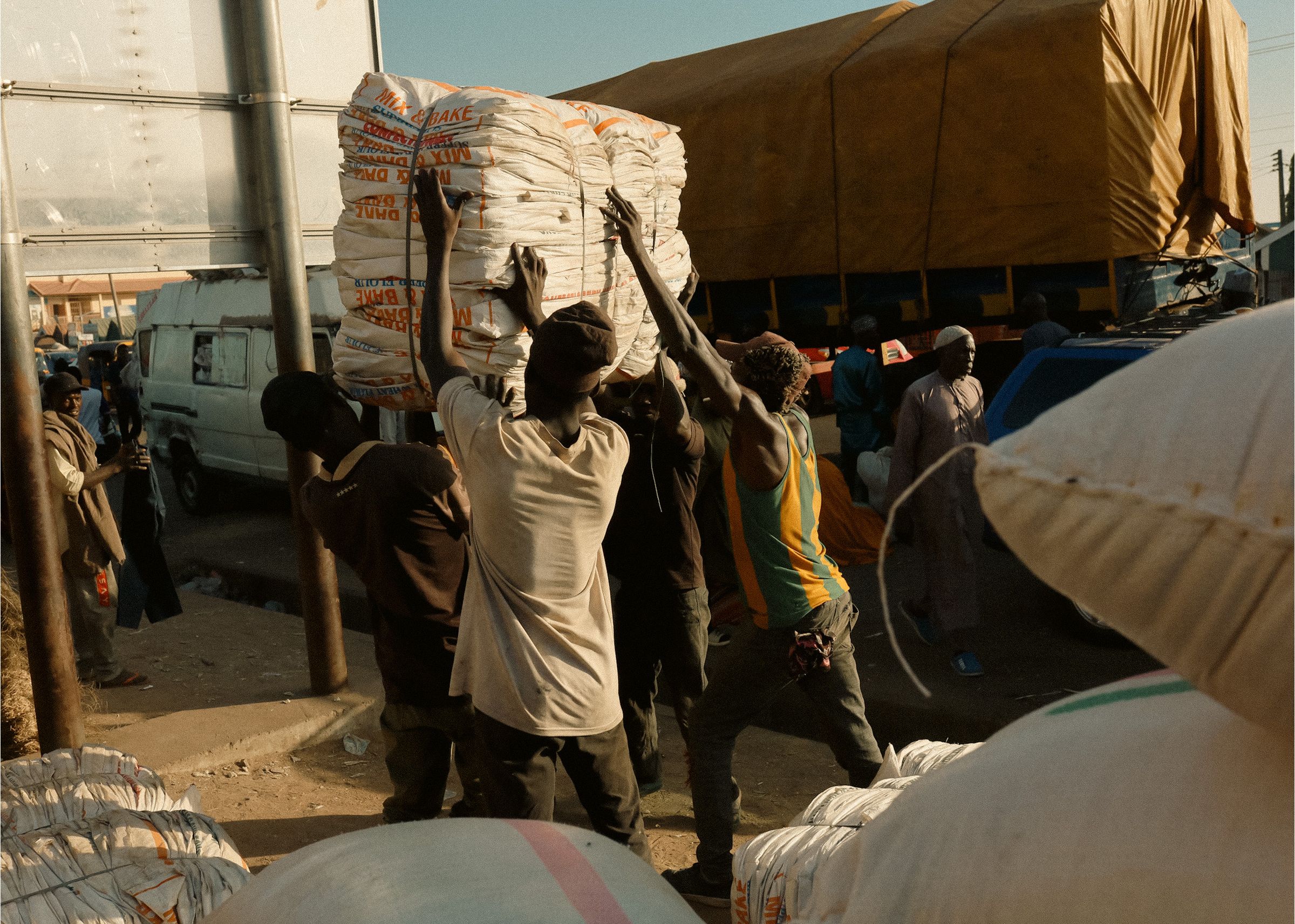
African governments came under renewed pressure this week to dismantle the tariff and non-tariff barriers that continue to fragment the continent’s markets, as an international conference on the African Continental Free Trade Area (AfCFTA) closed with a communiqué demanding faster, more practical action on trade integration.
The call, issued on Tuesday and signed by Ngozi Egbuna, director of ICRITR at Nnamdi Azikiwe University, Awka, was jointly endorsed by Justin Amase, chairman of the Conference Communiqué Drafting Committee, and Manfred Kouty, coordinator of the Africa Trade Group (ATG) and co-chair representing Cameroon. It framed the continent’s trade problem in explicitly economic terms. Delegates identified tariff and non-tariff barriers, fragmented customs procedures and inadequate infrastructure as the principal constraints on intra-African commerce, and urged a shift “from formal agreements and protocols towards practical measures” to ease the movement of goods, services, capital and people across African markets.
For businesses and investors operating on the continent, the message was blunt. The returns on AfCFTA will remain unrealised unless governments accelerate implementation of the agreement’s protocols and commitments. The conference argued that stronger execution would deepen trade integration and, in turn, widen the market available to African firms, many of which currently face higher costs and slower clearance than their competitors in more integrated regions.
Meanwhile, the communiqué pressed a broader industrial agenda. It emphasised regional industrialisation, local value addition, technology transfer and stronger African participation in regional and global value chains. That framing positions African producers not merely as traders but as operators seeking to capture more of the value generated within continental supply chains, a shift that would require sustained capital investment and policy coordination.
On Africa’s position in the global economy, the conference called for coordinated strategies to protect the continent’s economic interests amid shifting geopolitical conditions and changing international trade relations. It further urged investment in transport, energy, logistics and digital infrastructure, arguing that such spending would reduce business costs and make regional trade more viable for operators of all sizes.
Participants were careful to define what AfCFTA represents beyond tariff schedules. The communiqué described the agreement as more than a trade liberalisation initiative, calling it “a strategic instrument for Africa’s economic transformation, industrial development, regional integration and enhanced participation in global economic governance.” The document added that the success of the AfCFTA “will depend not merely on the commitments contained in its founding agreement and protocols, but on the political will,” as well as on institutional capacity, policy coordination and the sustained investments required to translate commitments into tangible economic outcomes.
That assessment carries a clear warning for investors and development institutions watching the continental market: the commercial opportunity created by AfCFTA is contingent on public-sector delivery. Without political commitment and capable institutions, the communiqué suggests, the agreement’s economic promise risks remaining on paper.
The conference, organised by the Africa Trade Group under the WTO Chairs Programme, ran from November 9 to 10. It brought together policymakers, trade experts, academics, regional organisations, private-sector representatives and development institutions to deliberate on Africa’s trade and economic prospects, a mix that reflected the agreement’s dependence on both public policy and private capital.
The full communiqué and coverage of the conference’s recommendations were published by Peoples Gazette, available at https://gazettengr.com/afcfta-conference-urges-african-governments-to-remove-trade-barriers/.
The underlying argument of the gathering was straightforward: Africa’s economic transformation depends on turning commitments into functioning markets. For governments, that means removing barriers and simplifying customs. For businesses and investors, it means the continent’s largest single market will only deliver returns as fast as the infrastructure, institutions and political will behind it allow. Whether that delivery comes at the pace the communiqué demands remains the open question for anyone placing capital on the continent.