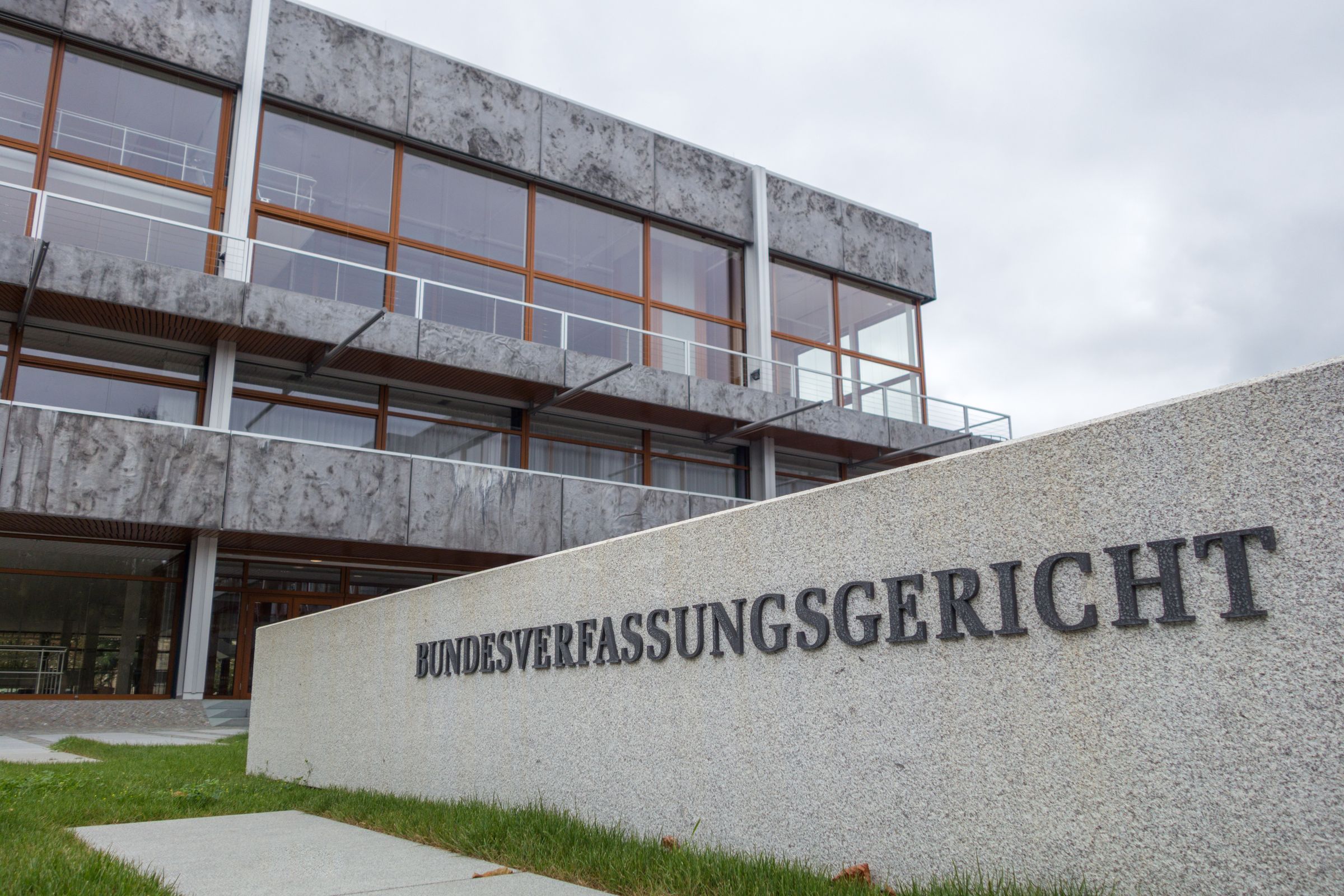
The Constitutional Court’s November 12 order refusing Jacob Zuma leave to appeal, with costs, in Zuma vs Presidency of the Republic of South Africa and Others has closed the latest chapter in a years-long fight over who bears responsibility for unlawful public spending. The Jacob Zuma Foundation has responded by questioning the reasoning behind the decision rather than the decision itself.
The case concerns the recovery of R28,960,774 in legal costs the state paid towards Zuma’s private legal battles, largely connected to the corruption charges arising from the 1999 arms deal.
“The JG Zuma Foundation notes the order of the Constitutional Court dated 12 November 2026 in Zuma v Presidency of the Republic of South Africa and Others. The order refused HE president Zuma leave to appeal, with costs, in the matter concerning the recovery of approximately R28.9m in state-funded legal costs,” the foundation said.
The foundation said it respected the court’s decision but disputed its finding that the court’s jurisdiction had not been engaged. In its view, the Constitutional Court failed to adequately explain why the constitutional questions raised in Zuma’s application did not warrant intervention.
At the heart of the foundation’s argument is a question about remedial power under section 172(1)(b) of the constitution: whether it is just and equitable to order an individual to repay, personally and in full, money spent pursuant to an unlawful decision taken by the state itself. “That question goes to the limits of the courts’ remedial power. It also decides where accountability for unlawful public spending must fall and what protection is owed to people who rely on the state’s own undertakings. A matter does not stop being constitutional because the remedy involves money,” the foundation said.
The foundation also pointed to what it described as an inconsistency in the court’s handling of the application. The court granted condonation, finding the delay in bringing the application minimal and the explanation adequate, yet then dismissed the application without explaining why the section 172(1)(b) question was not constitutional or of public importance. “The foundation respects the court and accepts that its orders are binding. Respect does not require silence. A court that requires reasons from public officials and other courts should give sufficient reasons when it declines jurisdiction. This applies with particular force in a matter involving constitutional remedies and substantial public funds,” the foundation said.
Meanwhile, the dispute has a long institutional history. In December 2018, the high court in Pretoria declared invalid and set aside the decision of the Presidency and the state attorney to fund Zuma’s legal costs. That funding arrangement had been concluded in 2006 under former president Thabo Mbeki and continued under later administrations, with payments made between 2005 and 2019. The Supreme Court of Appeal upheld the 2018 ruling in 2021.
The litigation has been driven in part by political parties. The EFF played a role in the earlier proceedings that produced the 2018 ruling, while the DA, involved in the litigation seeking recovery of the money, opposed Zuma’s latest attempt to challenge the repayment order.
In October 2025, the Pretoria high court ordered Zuma personally to repay R28,960,774, together with interest. Judge Anthony Millar rejected the argument, advanced by Zuma’s legal team, that liability should not fall on him personally because the funding decision had been made by officials in the state attorney’s office. Millar found that the earlier court rulings had contemplated that Zuma himself would be required to repay the money.
The foundation has maintained that Zuma did not authorise the expenditure or approve the payments. “HE president Zuma did not interpret the State Attorney Act, authorise the expenditure or approve the payments. He accepted an undertaking made by the state. The court found the state’s decision unlawful. It made no finding that president Zuma was responsible for that decision,” the foundation said.
The repayment order gave Zuma 60 days to settle the debt. Should he fail to do so, the state attorney was authorised to pursue enforcement measures, including attaching and selling his movable and immovable property, and seeking the attachment of his presidential pension or a portion of it, subject to the necessary legal process. The state attorney was also directed to report to the court every three months on efforts to recover the money.
Zuma’s application for leave to appeal against the repayment order was dismissed by the high court in December 2025, after which he approached the Constitutional Court, whose refusal now stands as the final word on the matter. Whether the state attorney moves to enforce the order, and on what timeline, is the open question that follows.