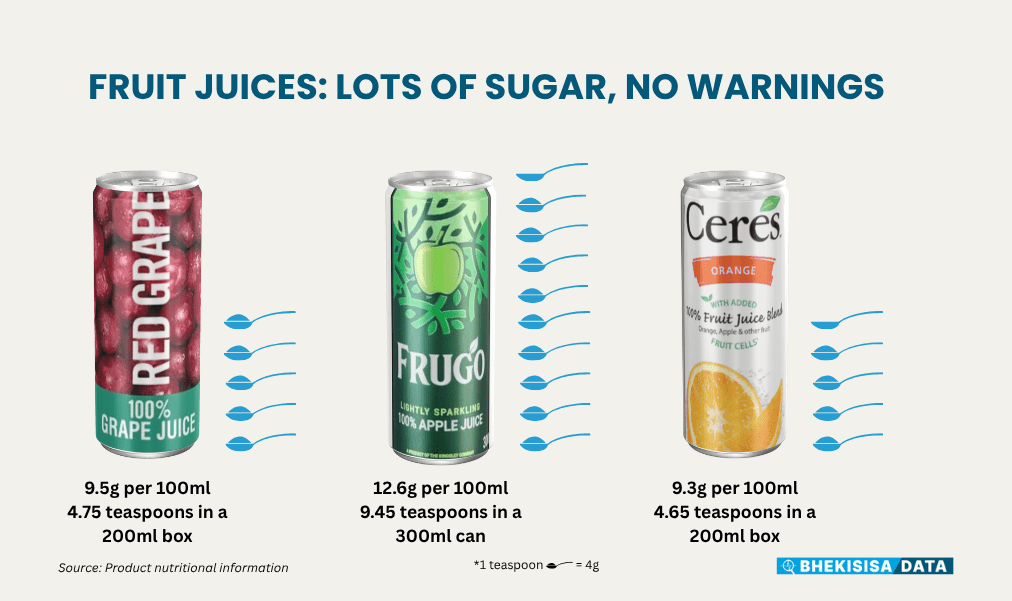
100% fruit juice often seems like a healthy choice, but when we look closer at the sugar content, it’s clear that apples, oranges, and grapes—though healthy in whole fruit form—can rival sodas when juiced.

🍎 Introduction: Juice Isn’t Always Just Juice
100% fruit juice is widely marketed as natural and nutritious. But is it truly healthy when consumed in typical portions? In many cases, you’re ingesting as much—or even more—sugar than in sodas or sugary drinks. That’s why this article makes the case for a sugar warning label on 100% fruit juice.
The Sugar Content in 100% Fruit Juice
Let’s examine sugar levels in common 100% fruit juices:
- Apple juice (240 ml): ~24 g of sugar
- Orange juice (240 ml): ~21 g of sugar
- Grape juice (240 ml): ~36 g of sugar
Compare that to a typical soda—about 39 g sugar in a 12 oz (355 ml) can. Clearly, fruit juices can contribute a significant sugar load.
Why a Sugar Warning Label Is Needed
1. Hidden sugars in ‘natural’ drinks
People often assume 100% fruit juice is inherently healthy. But since it lacks fiber and is highly concentrated in sugar, it can spike blood glucose and contribute to obesity, diabetes, and tooth decay.
2. Excess calories and blood sugar spikes
Juice is easy to overconsume. Without fiber to moderate absorption, sugar floods the bloodstream quickly. That can lead to insulin resistance over time.
3. Lack of awareness
Warning labels help consumers make informed choices, similar to those on soda and energy drinks.
Health Risks Tied to High Juice Consumption
Obesity and weight gain
Regular juice drinkers face increased obesity risk, especially children—studies show one glass can add 150 calories to daily intake.
Type 2 Diabetes & metabolic syndrome
With a glycemic index often over 50, fruit juices contribute to insulin spikes and may foster metabolic issues over time.
Dental cavities
Sugary drinks are a known cause of tooth decay—fruit juice included.
Liver stress
High-fructose loads, particularly from grape juice, can strain the liver similarly to sugary sodas.
Labeling Precedents: What Other Countries Do
- Chile: “High in sugar” front-label warnings on packaged foods and beverages.
- United Kingdom: Voluntary “traffic light” labels show sugar levels.
- Mexico: Mandatory stamp-based warnings on sugary beverages, now including fruit juices.
These measures have led to reduced sugar consumption and increased consumer awareness.
How to Better Inform Consumers
- Mandatory front-of-pack warnings: “High sugar content” signs on 100% juices.
- Recommended serving sizes: Clearly stated, e.g. “4 oz per serving”.
- Glycemic index info: Help consumers manage blood sugar.
- Educational campaigns: Promote whole fruits over juice.
Healthy Alternatives to Juice
Whole fruits
Eating whole apples or oranges gives fiber and satiety—juice lacks both.
Infused water
Add slices of fruits or berries to water for flavor with nearly zero calories.
Vegetable-based juice blends
Mix with leafy greens like spinach or kale to reduce sugar and boost nutrients.
Diluted juice
Mix half juice, half water to halve sugar intake.
Tips for Consumers
- Check sugar per serving; aim for < 15 g/8 oz.
- Favor 100% juice over added-sugar drinks—but still limit intake.
- Swap juice with whole fruit or water most days.
- Watch portion sizes—stick to 4–6 oz.
- Consume juice with a meal to buffer blood sugar spikes.
In summary, while 100% fruit juice is often marketed as healthy, its sugar content is comparable with sodas. A sugar warning label on 100% fruit juice can guide consumers to make healthier choices and reduce sugar-related health issues. Choosing whole fruits or healthy alternatives can significantly cut sugar intake and improve well-being.
For more on healthy beverage swaps, visit our Healthy Drinks Guide.
Table of Contents
- Introduction
- Sugar Content in 100% Fruit Juice
- Why a Sugar Warning Label Is Needed
- Health Risks
- Labeling Precedents
- How to Inform Consumers
- Healthy Alternatives
- Tips for Consumers
For more news please visit our website: africaheritagevoice.com