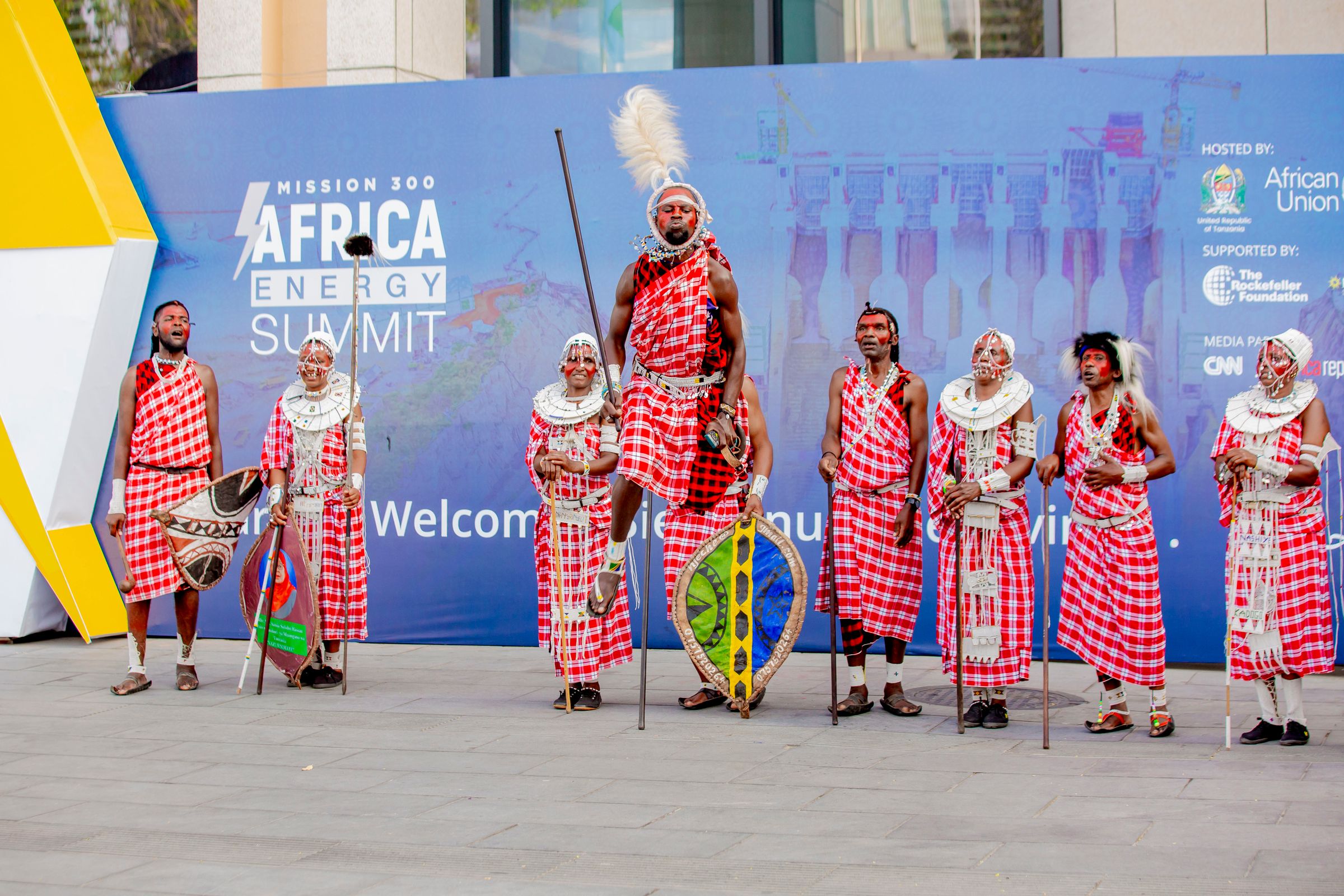
Africa’s governments are pressing their case inside the very institutions that govern the global order, and the institutions are beginning to respond. In 2026, a year already dense with diplomacy, African states have moved from symbolic victories to structural demands, targeting the global financial architecture and the composition of the United Nations Security Council. The question now facing external powers is not whether to engage the continent, but on whose terms.
The momentum is visible in concrete institutional outcomes. Following September’s United Nations General Assembly High-Level Week and the recent International Monetary Fund and World Bank Annual Meetings, African states secured the General Assembly’s adoption of a resolution encouraging equal-area map projections that show the continent’s true size. Attention has now shifted to reforming the financial system to address debt and unlock capital for major investment. According to analysis published by the Carnegie Endowment for International Peace at https://carnegieendowment.org/research/2026/10/africa-diplomacy-foreign-policy-african-interests-critical-minerals, global and rising powers will need to engage with Africa’s priorities and agency to secure the continent’s increasingly attractive partnerships.
At the United Nations, the accountability question is explicit: who holds permanent power, and under what mandate. African countries, organized through the Committee of Ten Heads of State and Government, have advanced a Common African Position on Security Council reform. It seeks two permanent seats with full veto rights, since the continent currently holds no permanent seat, and five nonpermanent elected seats, up from the current three. Through lobbying, negotiation, and the weight of fifty-four General Assembly votes, the C-10 has mobilized support for Africa’s inclusion from all five current permanent members, though seat numbers and veto rules remain unresolved. Four of the top ten troop contributors to UN peacekeeping operations are African: Rwanda, Ghana, Morocco, and Egypt.
Voting records show how African states use these forums. On Resolution ES 11/1, condemning Russian aggression against Ukraine and adopted on March 2, 2022, twenty-eight African countries voted in favor, sixteen abstained, one voted against, and nine were absent. On Resolution ES-10/22, calling for an immediate ceasefire in Gaza, hostage release, and humanitarian access, forty-four African countries voted in favor, six abstained, one opposed, and three were absent. In both cases the overwhelming majority aligned with a rules-based order consistent with the African Union’s Constitutive Act. Such resolutions are unenforceable. Even so, the process itself confers legitimacy, which is why intense diplomatic courtship follows whenever sensitive resolutions arise.
Meanwhile, the African Union, headquartered in Addis Ababa, has functioned as the institutional hub for much of this diplomacy. Ethiopia, host of the AU Commission, received fifteen high-level visits between January and August 2026, the most of any country, ahead of Morocco with thirteen, Egypt with ten, and Kenya with nine. Addis Ababa hosted the ninth AU-China Strategic Dialogue in January, the second Italy-Africa Summit in February alongside the 39th Ordinary Session of the AU Assembly, and an AU-Russian Federation high-level consultation in July that framed a strategic partnership ahead of an October Russia-Africa summit. The AU is working to enhance its role as a foreign policy actor, benchmarking implementation of its Agenda 2063, now in its second ten-year window spanning 2024 to 2033. Ethiopia will also host COP32 in 2027, returning the climate summit to the continent five years after COP27 in Egypt.
By contrast, some regional bodies have become sites of institutional rupture rather than leverage. Since the coups in Mali, Niger, and Burkina Faso, those Sahelian states have splintered from the Economic Community of West African States to form the Alliance of Sahel States, building new security partnerships mainly with Russia and other rising powers. Niger is the world’s seventh largest uranium producer by volume, Mali holds substantial gold and lithium reserves, and Burkina Faso offers significant gold mining prospects. These governments have leveraged those endowments for security, energy, and diplomatic partnerships while promoting resource nationalism, though the Carnegie analysis notes this autonomy has not yet delivered security or development outcomes for broader populations.
Elsewhere, institutional bargains are being struck directly. South Africa, during its G20 presidency, promoted a critical minerals framework for local beneficiation aimed at rebalancing supply chains. The 2025 Strategic Partnership Agreement between the United States and the Democratic Republic of the Congo, holder of the world’s largest cobalt reserves, offers Washington a chance to break a Chinese stranglehold on cobalt exploitation, while giving Kinshasa leverage to address the M23 insurgency in its east.
The through-line, for those tracking institutions and accountability, is that African states are no longer passive recipients of external policy. They are co-authors of the rules under which engagement proceeds, and external powers, from Washington to Brussels to Moscow, must now negotiate within frameworks African actors increasingly help to define. Whether the Security Council’s permanent members translate stated support into binding reform may be the decisive test of 2027.