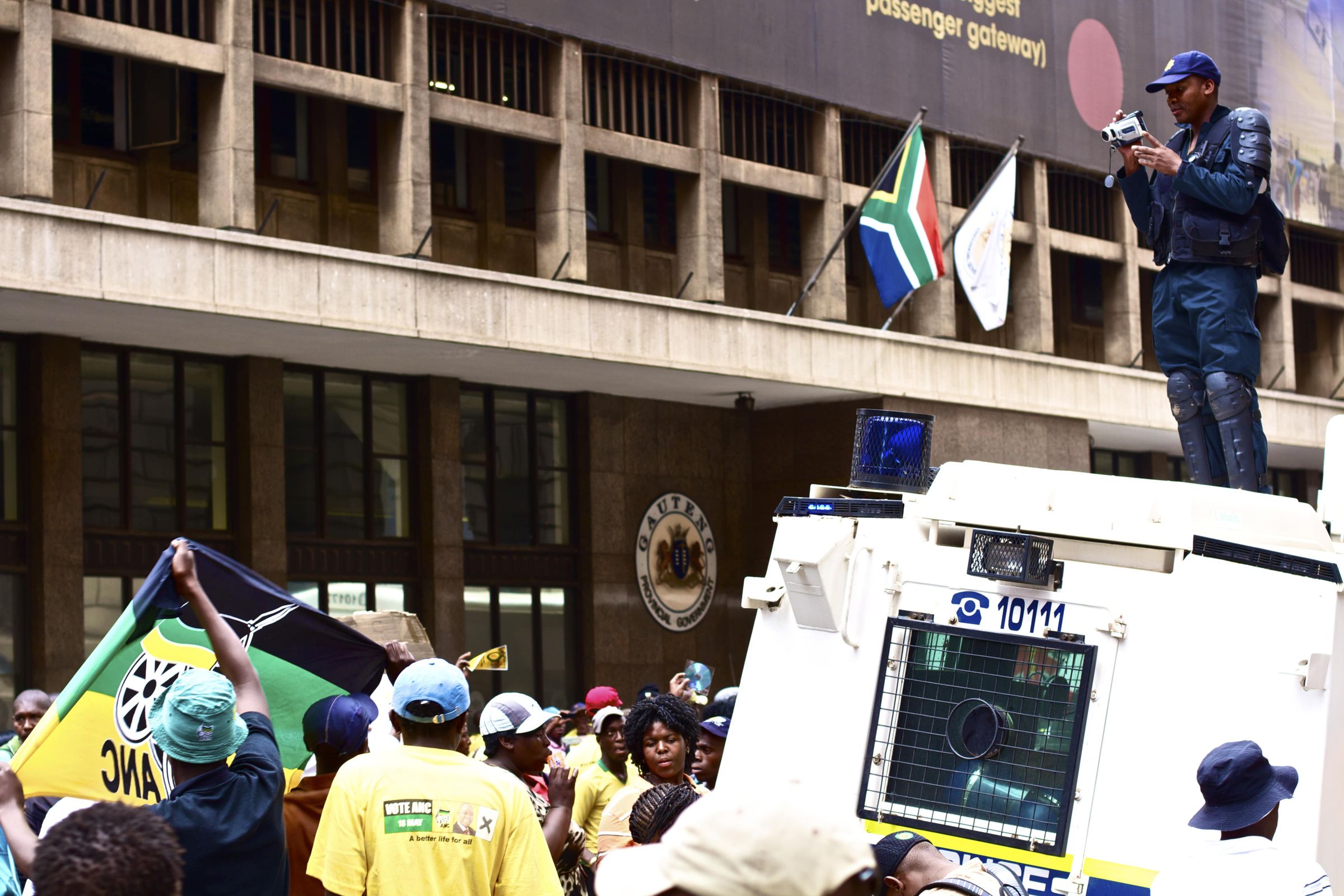
Nearly 140 of South Africa’s 213 municipalities returned no outright majority in the latest local elections, leaving the councils that run water, housing and basic services without a clear governing centre. The ANC, the party that has operated most of these structures for decades, won just under 31 percent, its worst result ever recorded.
The scale of the slide is best measured against recent baselines. The party stood at 46 percent in the 2021 local elections and 40 percent in the 2024 national election. Below 31 percent, the ANC no longer commands majorities in most of the country’s municipalities. That shifts the immediate task from council administration to council formation, and until coalitions are settled, the institutions responsible for delivery on the ground sit in political limbo.
On the Talking Sense panel, Marius Roodt worked through the results and argued it is still too early to write the ANC off, even at this level of decline. James Myburgh offered a sharper reading of what voters were doing at the ballot box: rejecting the ANC’s patronage politics. Myburgh also identified what may be the most consequential structural change in the results, saying the Democratic Alliance has crossed the racial divide in South African politics for the first time.
That breakthrough shows up in the geography. The panel examined the DA’s gains in uMngeni and Emfuleni, two municipalities where the party expanded beyond its traditional base. It also noted the role of smaller parties, which took seats directly from the ANC and now hold pieces of the bargaining power in the hung councils scattered across the country.
The practical question facing implementers at municipal level is which governing formula can actually be assembled and sustained. The panel identified two coalition architectures that, between them, could cover the country. The first pairs the ANC with the DA. The second pairs the ANC with the MKP and the EFF. Each carries different implications for how councils function and how services are administered, and the choice between them is now the central variable in whether the roughly 140 hung municipalities can be governed at all.
For the ANC, the arithmetic is unforgiving. With just under 31 percent, it cannot govern alone anywhere at scale, and every coalition route runs through partners whose demands will shape council budgets, appointments and priorities. Roodt’s caution against writing the party off reflects the fact that it remains the largest single vote-pool in the system. But its operational position has changed fundamentally: it is now a component in coalitions rather than the default operator of the municipal state.
Meanwhile, the DA’s gains in uMngeni and Emfuleni, combined with Myburgh’s assessment that it has crossed the racial divide, suggest a party whose delivery record is now being tested by voters well beyond its historic constituency. Whether that translates into durable governing majorities depends on the same coalition negotiations now under way.
The smaller parties that peeled seats off the ANC hold leverage disproportionate to their size. In hung councils, their votes are the margin between a functioning majority and prolonged instability, and their price for support will be written into the governing arrangements of municipalities across the country.
The results leave South Africa’s local government layer in an unfamiliar state: no dominant operator, two competing coalition blueprints, and a delivery mandate that cannot begin in earnest until one of those blueprints is chosen. The ANC’s worst result ever, down from 46 percent in 2021 and 40 percent in 2024, has not ended its role in the system, as Roodt cautioned. But it has made coalition-building, not electoral dominance, the mechanism through which the country’s municipalities will now be run, and the first test of that mechanism is whether functioning councils can be seated at all.