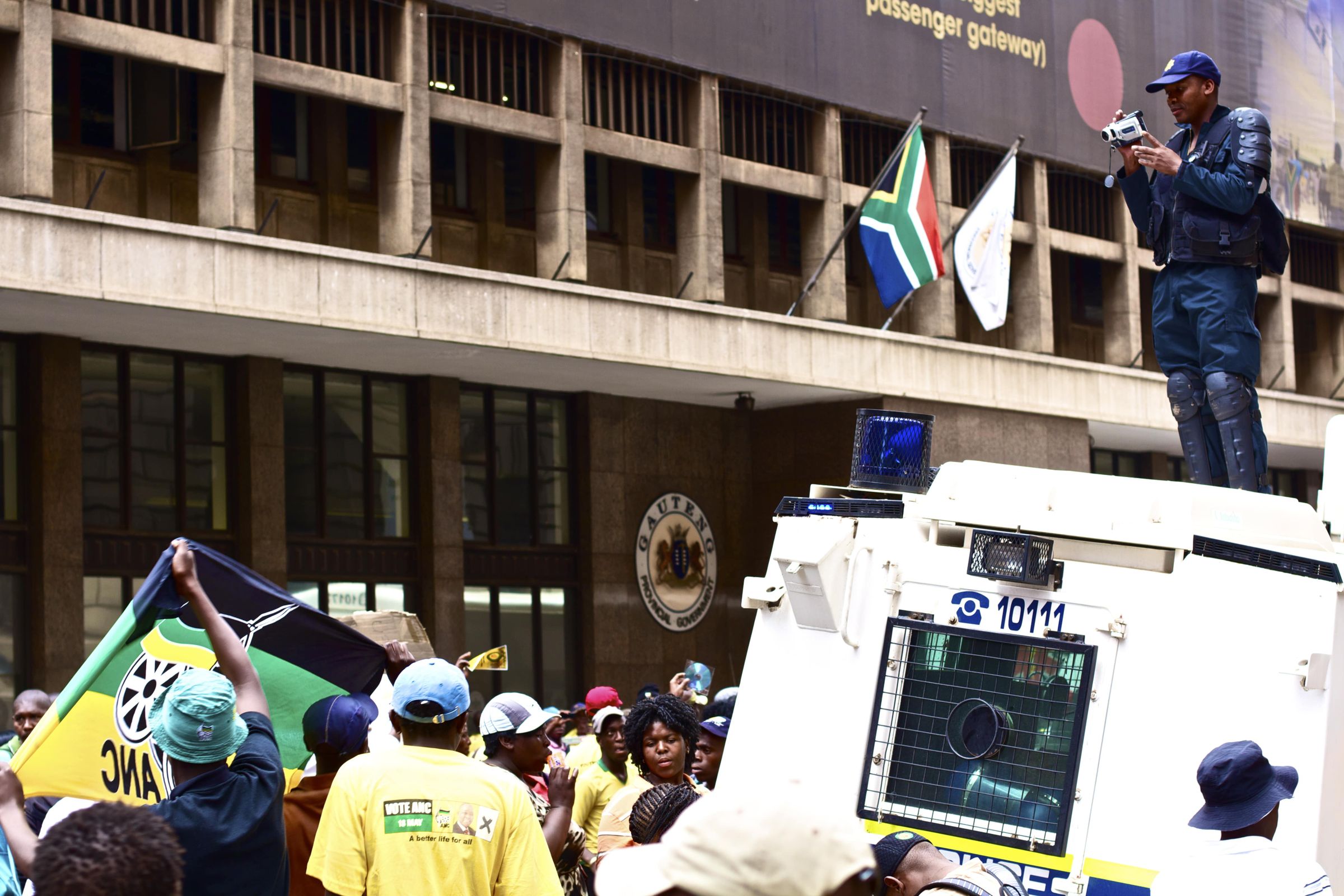
For households on South Africa’s urban township fringes, the 2026 local government elections were less a political contest than a verdict on daily life. A new analysis by Bheki Mahlobo, published on November 16, 2026, argues that the African National Congress lost those elections because the economic progress that once defined its rule has stalled, and the people who felt that stall most directly took their votes elsewhere.
The report draws on more than 30 years of economic and political data. It traces a chain running from the performance of the economy to the political support the ANC has enjoyed, a chain that ends in the homes of ordinary voters: whether there is electricity at the plug, water in the pipe, a job to go to, and money left at the end of the month.
Between 1994 and 2008, business and consumer confidence broadly rose, and ANC support in local government elections rose with it, peaking at 66.0% in 2006. Thereafter confidence weakened, and support fell, reaching 31.0% in 2026. The report describes business confidence as a leading indicator of investment, since it measures how businesses view economic conditions and therefore their willingness to invest. Investment rose between 1994 and 2008 in line with confidence, then declined. Growth strengthened in those same years and then slowed sharply. Employment rose strongly before 2008 and then slowed. GDP per person climbed as growth accelerated, then stagnated and declined. At each step, ANC support followed the same path.
For families, these abstract lines translated into concrete change. Strong growth between 1994 and 2008 allowed rapid rises in welfare and service delivery expenditure even as debt levels were halved. The share of households without electricity fell sharply between 1995 and 2008 before the pace of improvement slowed. Access to piped water and sanitation improved over the same period, then progress slowed and piped water access actually slipped. The report notes that the electricity trend holds for every service delivery indicator the ANC has presided over in government.
Meanwhile, as growth slowed, job creation stalled and the funds needed for service delivery were cut. Anger at the ANC surfaced in violent protest actions. The analysis calls this, in a sense, the ANC’s final warning that political support was going to be lost at elections. Little was done to improve the investment climate, and support fell in line with rising protest rates.
So where did those voters go? Nationally, the ANC lost 15.3 percentage points between 2021 and 2026. The uMkhonto weSizwe Party gained 9.8 points, ActionSA 3.4 points, others 3.2 points, and the Democratic Alliance just three points. The pattern was especially pronounced in predominantly black metropolitan voting districts, where the ANC lost 25 percentage points, the MKP gained 14, ActionSA ten, others 7.5, and the DA just five. Most of the support the ANC lost went to its splinter parties and their similar associates, which captured wards and markets the ANC once dominated.
The report explains this through the structure of the parties’ voter bases. The DA’s support comes from South Africa’s established middle class, while the ANC, the MKP and the Economic Freedom Fighters, and in this election ActionSA, draw their support from the aspirant middle class on the urban township fringes and in deeper rural areas. The ANC and the DA therefore compete within largely distinct voting markets, while the ANC shares one market with its smaller rivals.
Yet despite these different bases, voters themselves appear open to cooperation. The analysis finds that 68.0% of South Africans support an ANC and DA coalition where neither party wins a majority, including 83.0% of ANC voters and majorities across racial groups. Such a deal would allow the two parties to control 74.2% of South Africa’s municipal councils, 158 of 213 councils, home to 77.5% of the population, some 48 million of the country’s 62 million people.
The full analysis, published at https://www.thecommonsense.co.za/Editorials/analysis-why-anc-lost-2026-local-government-elections, concludes that recovering lost support will require restoring the cycle from confidence to investment to growth to job creation that the party presided over until 2008. If that can be done, the ANC could likely shut the door on its smaller splinter rivals and even regain its national majority, given that the balance of the middle class is too small a voter market to command a national political majority.
Should the party fail, the road forks. Either the DA, or the DA with some future new political movement of the urban fringes, grinds out a national majority, or South Africa fragments further into a society of middle-class enclaves within a broadly unstable and low-growth economy. For the communities whose votes moved, that future is not an abstraction. It is the difference between a country that delivers and one that does not.