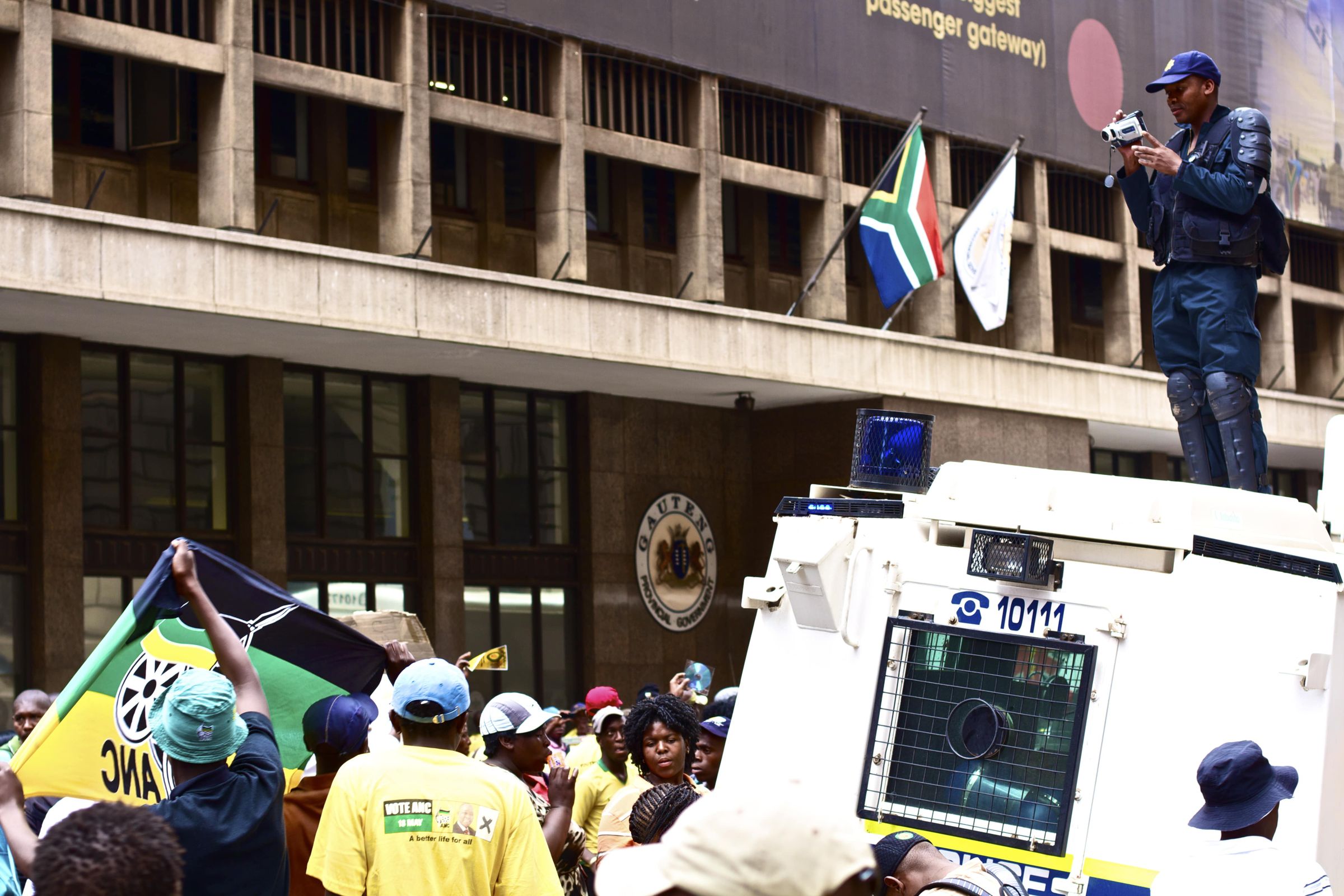
For the 181 ANC councillor candidates who feared their names would never appear on a ballot paper, last Wednesday brought relief. For thousands of other candidates in the same position, it brought something they never expected: a second chance. And for ordinary South Africans preparing to vote in the municipal elections on November 4, it was a reminder that the system they participate in still works.
The Constitutional Court ruled that those 181 candidates, left out of the Electoral Commission of South Africa’s system, ought to be included on the ballot papers. The court has yet to give its reasons, and it is unclear when those will come. But the effect of the judgment is immediate. Uncertainty has been lifted, and the country’s electoral jurisprudence has been enriched in the process.
At the heart of the ruling is a simple principle with real consequences for real people. Registering and paying a deposit, the court effectively found, are sufficient signals of a serious intention to stand for public office. An administrative glitch cannot trump the right to stand for election, and it cannot disenfranchise voters who want to exercise their choices. In practical terms, that means candidates who did everything required of them will not lose their place on the ballot because of a technical failure.
The Electoral Commission, which has run credible elections since the dawn of democracy, announced on Friday that it would comply with the apex court’s order. This despite the considerable strain the decision places on its preparations for the November 4 municipal elections. In the interest of free and fair elections and equity, the commission went further, extending the same benefit to 32 “similarly situated” political parties. Those parties, along with the ANC, will be contacted to confirm whether they still intend to participate. If they do, they will be added.
The scale of this is striking. According to Friday’s announcement, more than 2,000 candidates can, if they wish, get onto the IEC’s list, even though their parties were not in court and played no part in the ANC’s case. That is to be welcomed. It means thousands of people who put their names forward to serve their communities will get the opportunity they sought.
It would be a shallow reading of the judgment to see it as a victory for the ANC or a loss for the DA and the IEC. That framing would be unhelpful. This is a victory for constitutional democracy. That hundreds of parties are contesting these elections speaks to faith in the electoral system for the sphere of government closest to citizens’ lives, the one that delivers water, housing and local services people rely on every day.
South Africa has many problems. But it is blessed with strong institutions, and Wednesday’s ruling was a sign of that strength. The court deserves applause for doing what was right in the face of what seemed like anti-ANC public sentiment ahead of the ruling. Law courts exist to hold all of us accountable. As the final arbiter of disputes, its rulings must be respected, even those that appear unpopular. Those who were betting on a ruling in favour of the IEC should temper their criticism. Our constitutional democracy is anchored on the separation of powers, and that principle held this week.
There is also a lesson in contrast. As the immigration judgment showed, the country’s organs of state are notoriously tardy in implementing court judgments, and at times they get the interpretation horribly wrong. In this instance, the IEC moved quickly to identify the parties affected by the judgment and the candidates who found themselves in the same situation as the ANC’s.
The commission has assured South Africans that, while it faces the challenge of truncating its processes to apply the judgment, it has plans in place to fully comply. Most crucially, it does not believe the change of plans will affect special votes or the official voting day. That confidence comes from years of running glitch-free elections. The IEC deserves praise for its prompt action and its fair reading of the judgment.
For voters heading to the polls on November 4, the message is a reassuring one: the institutions built to protect their choices did exactly that. The question now is whether the court’s reasons, when they finally arrive, will match the practical generosity of the order itself.